
Where ideas meet possibility.
Every image begins with curiosity — sometimes sparked by a client challenge, sometimes by a question worth exploring. Here, I pull back the curtain on select projects to share what drove them, what they revealed, and how AI is transforming the craft and language of modern image-making.


This was a moment that changed everything.
I knew AI could be a useful tool, but I hadn’t expected it to create food that looked this real—so rich, so appetizing, so flawlessly composed. For the first time, I wondered: If a client had brought me this image, asking me to recreate it, would I have told them to just use it as is? The answer was yes.
It wasn’t just that the AI had generated something striking—it was that I had learned how to guide it, to coax out the kind of visual details that only a seasoned food photographer would notice. This was the moment I realized my career wasn’t ending—it was evolving. My tools were shifting from a camera to a computer, but the goal remained the same: creating irresistible imagery that connects brands with their audience.

After watching behind-the-scenes footage of The Mandalorian and seeing how they used massive LED screens to create immersive environments, I started wondering—could I apply the same concept on a smaller scale?
The model, cookies, and stove in this image are real, photographed in our studio. But the kitchen? That was built with AI and displayed on an 80-inch LED TV behind them. Unlike a green screen, this setup gave us a fully realized scene in real-time—no tedious cutouts, no last-minute surprises when props didn’t align. We could see everything exactly as it would appear, making adjustments on the spot.
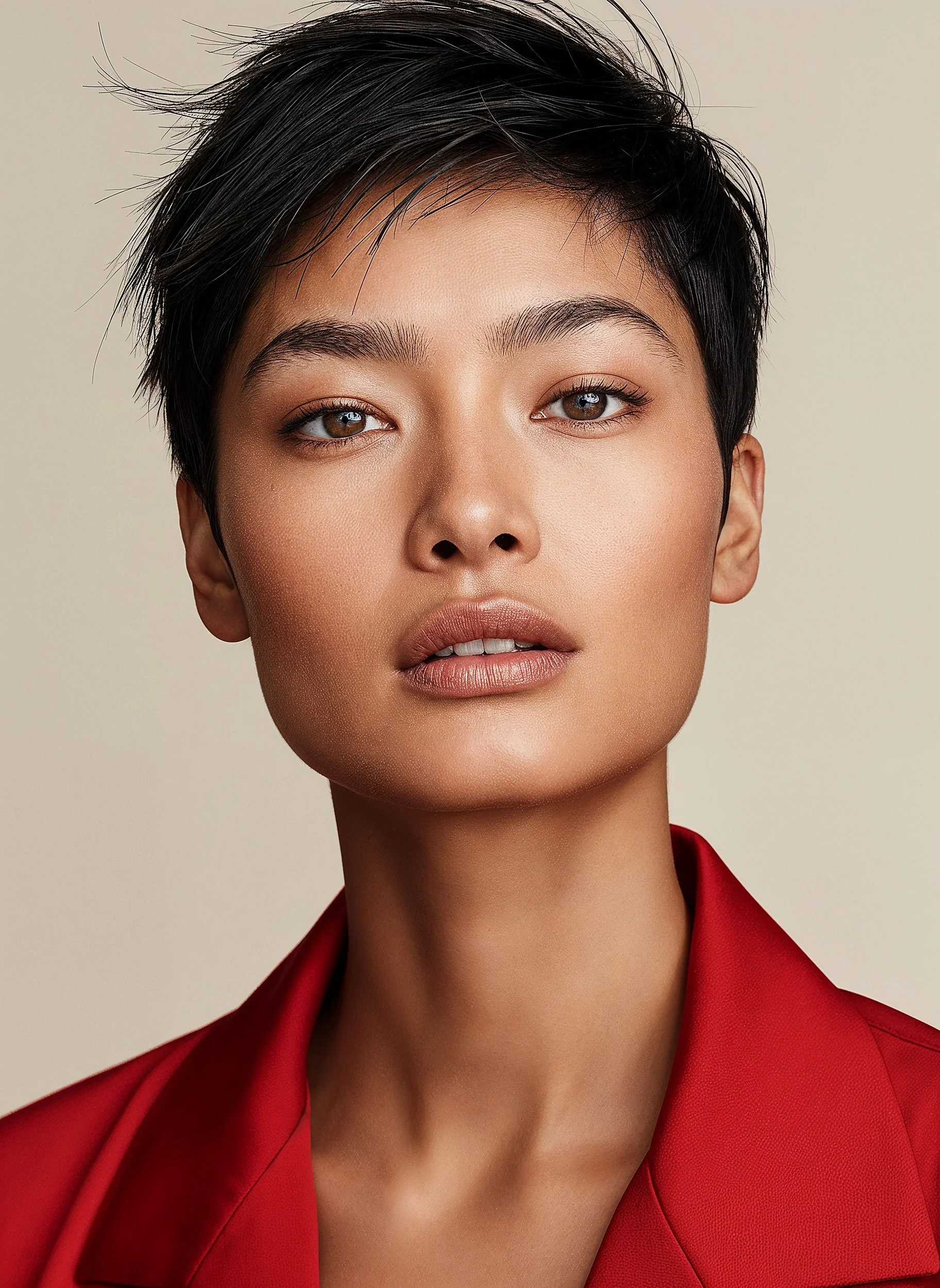
For a pharmaceutical brand, I needed an androgynous model—someone with a look that could challenge traditional beauty standards and appeal to a broad audience. If I had gone through a modeling agency, I might have had a couple of options at most. But with AI, I could create dozens, even hundreds, of possibilities.
There’s a lot of discussion about bias in AI, but when used thoughtfully, it can also be a tool for greater representation. It allows us to showcase a broader range of beauty, reflecting diverse markets and audiences in ways that weren’t always possible before.

The bottle in this image is real—photographed in the studio against a gray background. But the scene around it? That was built with AI. Using Photoshop, I composited the two together, allowing me to create a background and props that felt just right for the final image.
This approach gives us full creative control, ensuring every element complements the product perfectly—without the limitations of sourcing, styling, or set-building. It’s not about replacing reality, but about enhancing it.

The real advantage of using AI to generate people? Diversity.
Casting can be a challenge, especially when looking for underrepresented body types or ethnicities. The woman in this image, for example, would have been incredibly difficult to find through traditional means. But with AI, we were able to create exactly what we needed—authentic, realistic, and a perfect fit for the project.

Imagine a grocery chain launching Cuban Foods Week—a chance to celebrate culture, flavors, and traditions. But with a limited budget, producing a campaign that truly captures the spirit of Cuba might feel out of reach.
That’s where AI changes the game. Instead of paying for talent fees, usage rights, location scouting, hair and makeup, lighting, and set design, they can create stunning, authentic imagery at a fraction of the cost. This means more impact, more creativity, and the ability to produce visuals they never could have budgeted for before.
AI isn’t just making content—it’s making possibilities.

AI isn’t quite there yet when it comes to recreating exact products, which is why this eyewear image combines traditional photography and AI. The model, environment, and lighting were all generated with AI, while the glasses themselves were photographed in the studio on a gray background. Using Photoshop, I composited everything together to create a final image that looks completely real—while being produced for a fraction of the cost of a traditional shoot.
And best of all? No weather delays!
AI isn’t limited to still images. This piece started as a single generated image, but with AI, we transformed it into a fully animated video.
Now, imagine the possibilities—B-roll for an ad, a commercial, or even a movie—created without the need for costly shoots, elaborate sets, or extensive production time. AI is opening new doors for motion content, making high-quality visuals more accessible than ever.
The following image was a stock request from an agency. The call had gone out to thousands of photographers, but the request was so specific that I knew very few would actually have it as a for-sale stock image—an intimate moment between a pregnant young woman and her grandmother, both wearing traditional Muslim attire, looking at fabric together.
Realizing how rare this would be in traditional stock libraries, I decided to create it using AI. The agency loved the result, but their client was hesitant to use a fully AI-generated image in their ad. Yet, if they were only planning to license stock photography, why not use an AI image? It provides the same level of rights protection, meets the exact creative need, and removes the uncertainty of searching for something that may not even exist.


A decade ago, creating an image like this would have been a complicated task. An art director would have needed to source both an illustrator and a photographer—two specialists who could collaborate seamlessly to bring the vision to life. That kind of coordination wasn’t always practical, and in many cases, the idea may never have made it past the concept stage.
Now, with AI, the entire process is streamlined. I photographed the bottle traditionally in the studio, and I illustrated the glass and background using AI—allowing the art director a single point of contact for more creativity, more control, and a level of efficiency that simply wasn’t possible before.

The client was launching a new bourbon brand but only had a CAD drawing of the bottle. Instead of waiting for production, I used that file to generate a realistic bottle filled with bourbon and a second version wrapped in white. By combining the two, I created the look of a finished bottle with a neck wrap.
From there, I added the label in Photoshop, then used AI to generate the background and a glass of bourbon—bringing everything together from nothing more than a technical drawing.
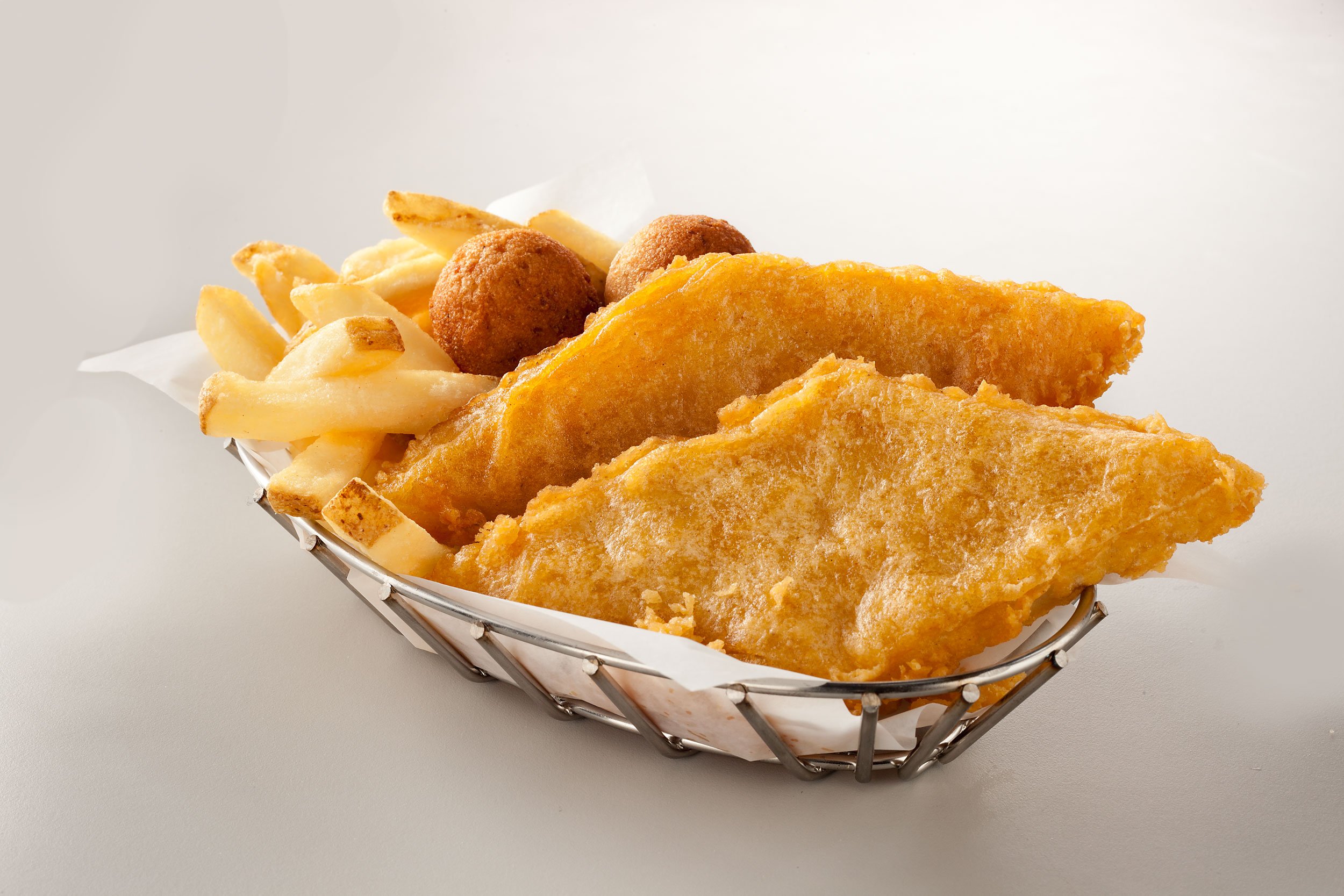
Imagine a theme park or large-scale dining concept where food is prepared in a central kitchen but served in multiple themed outlets. Traditionally, each location would require its own set of images to match its unique branding—but what if a single photograph could be transformed to fit any environment?
I revisited an image I shot years ago for Long John Silvers and reimagined it for three completely different venues. By capturing the dish on a neutral gray background with balanced lighting, I was able to adapt it seamlessly into multiple themed settings—perfect for menu boards, signage, or any branded materials.
This approach eliminates the need for endless reshoots while offering limitless creative flexibility—one image, infinite possibilities.


Though fully AI-generated, this image reflects the same attention to texture, lighting, and movement that defines my traditional food photography. The warm glow, the way the syrup catches the light, the inviting softness of the pancakes—all carefully considered to evoke the same sense of indulgence as any image I’ve captured in-camera.
AI may generate the pixels, but the artistry comes from the process—guiding the prompts, refining the details, and shaping the composition to fit the visual language I’ve developed over decades. Just like my traditional work, this piece invites the viewer in, stirring a craving, a memory, or a moment of comfort.
The line between AI and photography continues to blur, proving that creativity—not the tool—defines the image.


These images were created for Adobe Stock, but imagine the possibilities for a restaurant, grocery chain, or food brand looking to emphasize freshness. Traditionally, capturing a scene like this would require visiting a farm at just the right time of year, coordinating the perfect sunrise light, and hoping for ideal conditions—all for an image that might simply serve as a supporting visual.
With AI, that entire process is streamlined. Instead of the cost and logistics of an on-location shoot, brands can create stunning, vibrant imagery that reinforces their message—without being at the mercy of seasons, weather, or travel. Freshness, on demand.

Sometimes, it’s the smallest details that complete a shot. For this Tanqueray image, I wanted a specific cool, concrete-textured wall—something that would complete the scene I had imagined. Instead of spending time sourcing physical materials, I used AI to generate the exact look I wanted and displayed it on a TV behind the set, seamlessly integrating it into the shot.
The only AI element here is the background, but by capturing it in-camera, I eliminated the need for post-production work like creating glass transparency or compositing elements together. Everything was captured practically, in a single shot—blending traditional photography with AI in a way that streamlined the entire process.
I capture a lot of images like this for menus, packaging, and promotional materials—places where a mouthwatering shot of a sandwich needs to grab attention. Traditionally, these images are static, designed for print or digital menus without movement. But what if the honey drizzle could actually flow?
Starting with the final image—where the honey had already reached the surface—I used Photoshop to remove part of the drip. Then, I fed the first and last frames into an AI video platform, which generated the motion in between, making it look as though the honey was running down the sandwich in real-time.
This wasn’t meant as a final execution, but rather as proof of concept. With a little additional post-production, it could be a fully polished piece—unlocking new possibilities for QSR brands looking to repurpose existing assets into dynamic, engaging content for menu boards, websites, and beyond.
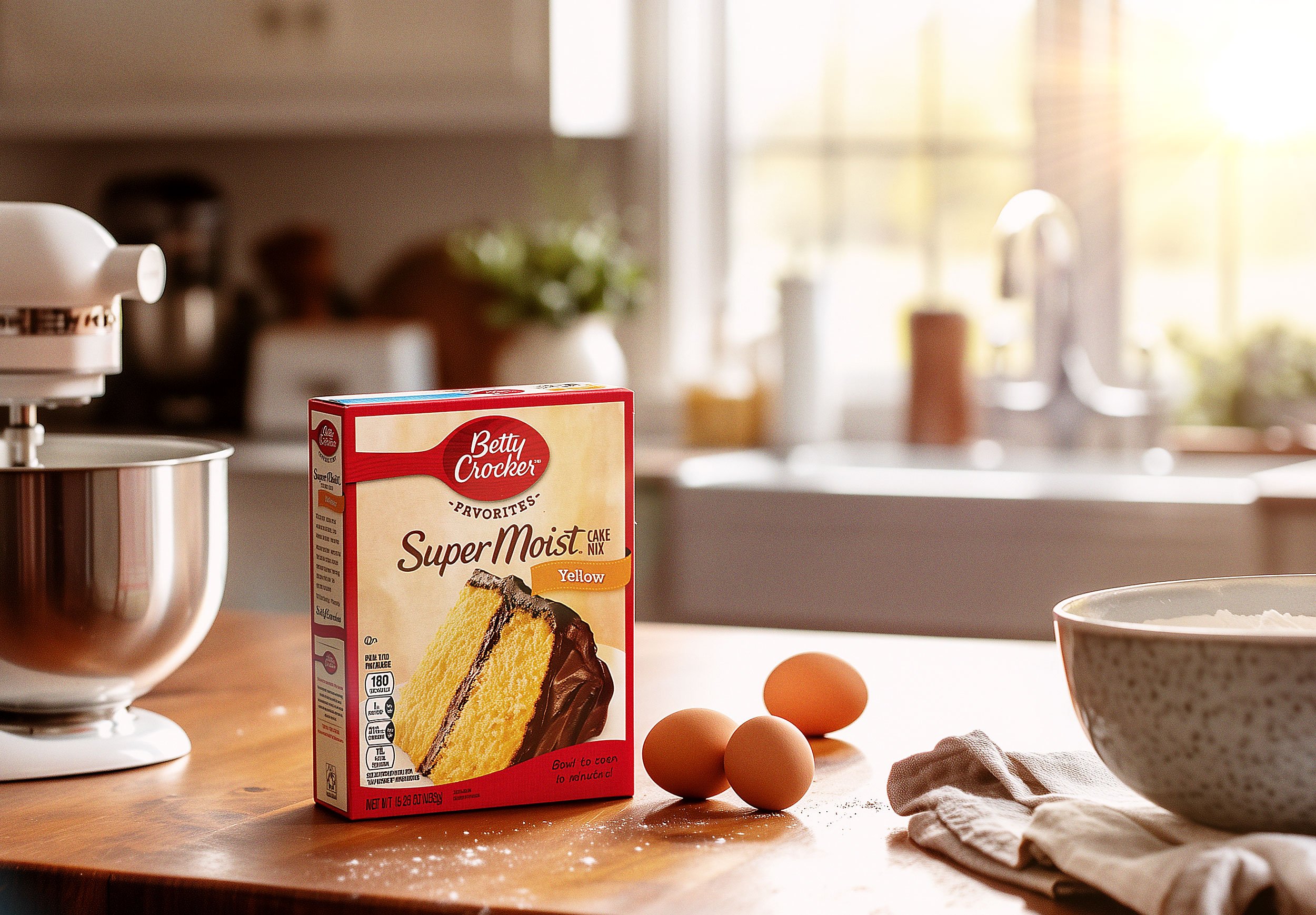
Brands need content—but the scale and expense of creating it should match its purpose. If you’re posting on Facebook at 3 PM on a Thursday, you wouldn’t build and light an entire set just to capture a single image of your product sitting on a table. The cost and effort wouldn’t make sense.
With AI, that process becomes far more efficient. For the Duncan Hines image, I photographed the package in the studio on a gray background and composited it into an AI-generated kitchen scene—delivering a polished, brand-consistent image at a fraction of the cost of a full set build.
AI hasn’t changed what I do—it’s expanded how I do it. My entire career has been about creating images that move brands forward—enhancing their identity, deepening consumer connection, and ultimately driving sales. That hasn’t changed. What AI has done is allow me to push beyond traditional limitations, blending photography with new tools to create visuals that are more dynamic, more flexible, and more purposeful than ever before.
At its core, AI has unlocked new creative possibilities. My expertise has always been in using a camera, not a paintbrush, yet now I have access to tools that let me explore and execute ideas in entirely new ways. Whether it’s crafting the perfect set, enhancing packaging visuals, or designing an environment that simply wouldn’t have existed otherwise, AI isn’t about replacing photography—it’s about expanding the creative potential behind every image.